
Client Photo

Info for Capstone Clients

Information for Capstone Clients

SIPA Capstone workshops apply the practical skills and analytical knowledge learned at SIPA to a real-world issue. Students from the Masters of International Affairs and Masters of Public Administration degree programs are organized into small consulting teams (generally about six students per team) and assigned a substantive, policy oriented project with an external client.

The collaboration between SIPA students and the organizations benefits both parties. The organizations benefit from the expertise of SIPA students, who have a wide variety of professional and educational backgrounds and who are in the final semester of a demanding, two-year professional degree program at one of the leading schools of international and public affairs in the world. All student teams are advised by a SIPA faculty member with relevant expertise. The students benefit from the opportunity to put learning into practice.

Through SIPA's general Capstone Program, student teams from the following concentrations work on a wide range of projects with external clients.  Student teams in the Development and Governance concentration – formerly the Economic and Political Development concentration – work with clients in the global development and humanitarian spaces through the Capstone Workshop in Sustainable Development Practice.

Climate, Energy, and Environment

Data Science for Policy

Human Rights, Gender, and Equity

International Finance and International Economic Policy

International Security and Diplomacy 

Technology Policy and Innovation 

Urban and Social Policy

  • Clients include public agencies (from the local to national level), international NGOs and multi-national organizations, and major firms in the private sector—recent examples include Citi Private Bank, Federal Reserve Bank of New York, Mercy Corps, New York City Mayor’s Office, the United Nations and the World Bank Group. Student teams, working under the supervision of a faculty expert, answer a carefully defined problem posed by the client. Each team produces an actionable report and an oral briefing of their findings at the close of the workshop that is designed to translate into real change on the ground.

    View the full directory of Capstone Workshops.
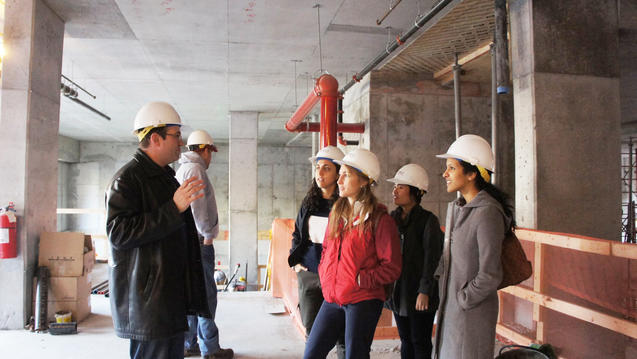
  • We seek to partner with organizations that can offer a project that is timely, but not urgent, which can be completed within a five-month period, that is of value both to the organization itself and to the learning experience of students.

    Potential applicants are strongly encouraged to discuss project ideas with Suzanne Hollmann, Senior Assistant Dean in Academic Affairs, before submission of a proposal. Applicants will be notified by the end of September about whether their proposal has been selected for further development. Applications received after July 31 will be considered on a rolling admissions basis. Priority will be given to applicants who have submitted before the July deadline.

    During the summer, we will match the organization with an expert faculty advisor who will work with the client organization to further refine the project scope and deliverables. In October, students submit a formal application to the Capstone program, rank ordering their top choices. Students are selected by the faculty advisor and are matched with projects based on their demonstrated skill sets and interests. The actual workshop is conducted from mid-November to and is completed in early May.

    Returning Client and Faculty Preliminary Timeline for Spring 2026 Capstone Projects

    July 31 Preferred date to receive project proposals for the Spring 2026 cycle of projects. Project proposals selected for the spring portfolio are matched with a faculty advisor in the July-August period.
    September 15 First draft of the project agreement (the “Terms of Reference” or TOR) should be completed between faculty advisor and client
    September 30 Final TOR due to SIPA
    October 6 Capstone project descriptions are posted on SIPA's website for students to view
    October 20 Deadline for students to apply to Capstone workshop
    November 10 Capstone team student assignments are announced
    November 14 Introductory session by faculty advisor for student team to discuss the details of the project and assign winter reading/research
    Week of November 17 At a time convenient for client, team meets/conferences with client
    December 8 Capstone team will produce a high level preliminary work plan for the project
    January 20 First day of classes for the spring semester
    Week of January 20 Suggested: Client meets/conferences with Capstone team to reconvene for spring term
    Week of March 9 Suggested: Midterm briefing to client on project’s progress
    March 16- 20 Spring break—teams that are traveling internationally will travel during this week—no classes for all other workshops
    Week of April 6 Suggested: Written draft report or initial findings submitted to client
    Week of April 20 Suggested: Client briefing of project findings
    Before May 4 Final report and briefing due to client
    May 4 Last day of classes
    Early May SIPA Capstone Closing Reception
    End of June Preferred date for clients to confirm interest in returning for next project cycle
  • Supported by a Columbia faculty advisor, each student team starts work by mid-November on a draft work plan. Based on their desk and field research, each team prepares a report and actionable recommendations for review by the client in late April. Students work on average 8-12 hours per week on their project.

    1. Define goals and deliverables. Clients work with the faculty advisor in the late summer/early fall to define the project goals and deliverables.
    2. Participate in meetings. Over the course of the project, clients are asked to participate in three standard meetings—these are: an initial “kick-off” meeting, mid-term presentation, and final presentation. Beyond these meetings, the client should be available for periodic calls over the course of the semester with the team for status updates (generally twice a month throughout the project).
    3. Provide appropriate support. When there are costs associated with the project, such as international travel, clients are asked to provide financial or in-kind support for the project, which is determined during the completion of the project agreement in the fall.

Applicants for consideration for the upcoming cycle will be notified before the end of September as to whether their proposal has been selected for further development.

Application Form

Capstone Client

Project Title

Faculty Advisor

American Security Project

Securing Stargate: Deploying and Defending America’s Artificial Intelligence Infrastructure

Amy Zalman

Banco Bilbao Vizcaya Argentaria (BBVA)

Project finance for Clean Energy

James Guidera

Bank of America

Policy at a Crossroads: Evaluating the US-UAE Partnership

Melanie Petsch

Benjamin Franklin House, London

A House for Democracy: Tackling Disinformation and Rebuilding Trust

Michael Sheldrick

BOMA Project

Policy Frameworks for Inclusive Growth: Leveraging Private Sector and NGO Partnerships to foster Sustainable Livelihoods for Women in Last-Mile Communities in East Africa and the Sahel

Carole Wacey

Calstart

Infrastructure and Influence: Realigning Real Estate, Regulation, and Public Mobility

Damian Busch

Carnegie Corporation of New York

Democratizing Knowledge: Carnegie Libraries for the 21st Century

Emily Drabinski

Center for Justice Innovation

Scaling What Works: A Data-Informed Roadmap to Expand Community Justice Programs

Rick Greenberg

Center for Popular Democracy

Mapping the Attack, Building the Base: A Human Rights Approach to Trans Rights Through Participatory Research and Organizing

Bela August Walker

Citi Community Capital

No Money For HUD? What Happens to Affordable Housing?

Carol O'Cleireacain

City of Buenos Aires

Implementing Climate Budgeting in Buenos Aires: Leveraging AI Tools for Success

Daniel Zarrilli

Community Sponsorship Hub

Refugee Resettlement and Community Sponsorship: A Study of the U.S. Experience

Walter Miller

Cyber Defense Assistance Coalition

Improving Cyber Defense Assistance to Meet the Challenges in Taiwan

Daniel Dobrygowski

Equinor

Strategic Leadership in the Energy Transition: Balancing Financial and Sustainability Goals

Ryan Hakim

Eurasia Group

Weaponized Interdependence in a G-Zero World

Markus Jaeger

Federal Reserve Bank of New York, Markets Group

Central Bank Financial Stability Frameworks: A Comparative Analysis 

Daniel Waldman

Financial Services Information Sharing and Analysis Center (FS-ISAC)

Disconnect: Cybersecurity Decision-Making for Financial Institutions

Sydney Jones

Food and Agriculture Organization of the United Nations

Access to Justice for the Right to Food: Overcoming Systemic Barriers

Peter Twyman

Gates Foundation

Building Farmer Resilience through Responsible Insurance Products and Practices

Daniel Osgood and Panos Varangis 

Girl Effect

Creating Standards for Sexual Reproductive Health Chatbots

Savita Bailur

Goldman Sachs

Transfer and Convertibility Risk in the Age of Economic Statecraft

Robert Kopech

Google Cloud: Office of CISO

Cyber-Enabled Fraud

Elizabeth Cartier and Neal Pollard

Government of Belize: Ministry of Education, Science and Technology

Implementing Belize's New Disability Legislation: Advancing Inclusion and Accessibility

Sayu V. Bhojwani

Government of Estonia: Ministry of Foreign Affairs and e-Goverance Academy 

Digital Governance for Effective Democratic Governance: The Estonian Way Around the World

Jenik Radon

Government of French Polynesia: Office of the President

French Polynesia: Deep-Sea Mining and Sustainable Economic Alternatives

Eric Chang and Jenik Radon

Government of Kosova: Office of the President

Kosova, Crafting a Global Strategic Promotion Strategy for a still Unrecognized Democracy

Mahima Achuthan

Government of Namibia: Ministry of Finance and Namibia Revenue Service

Maximizing Revenues for a Sustainable Future: Natural Resource Taxation in Namibia

Eric Chang

Government of Nigeria: Nigeria Sovereign Investment Agency (NSIA)

Mobilizing Climate Finance: Scaling Nigeria’s Green Bond Market for Net Zero Transition

Christine Capilouto

Habitat for Humanity International

Local Roots to Global Roofs - Scaling Housing Innovation

Chandani Punia

Halcyon House

Identifying Innovative Funding Sources for Impact-Driven Startups

Michelle Greene

IFC ILO Better Work Sri Lanka

Inclusive Employment Pathways: Mapping Barriers and Policy Reforms for Persons with Disabilities in Sri Lanka

Saleha Awal and Laura Perez

Inter-American Development Bank

Open Finance, Policy Recommendations for Maximum Effectiveness in Latin America and the Caribbean

Fernando Sotelino

International Crisis Group

Understanding the role of Organized Crime in Rising Violence in Traditionally Peaceful Latin American Countries

Elen Costigan

International Energy Agency

Decarbonizing Critical Mineral (CM) Supply Chains

Jonathan H. Elkind

International Energy Agency

Clean Energy Manufacturing in Southeast Asia

Jonathan H. Elkind

International Labour Organization

From Data to Action: Understanding Forced Labour Drivers

Thomas Liess

Jefferies Financial Group

Optimizing Affordability: A Statistical Analysis of State Housing Finance Agency Down Payment Assistance Program and Outcomes

Sigridur Benediktsdottir

Jubarte Capital

Pioneering Retirement Innovation in Brazil

Drausio Giacomelli

McKinsey & Company

Securing Agentic AI: Building a Risk Taxonomy and Decision Framework

Andrew Jaquith and Stephen Sparkes

Moody's Ratings

Potential for Catastrophe Bond Issuance to help Latin American Sovereigns Manage Climate Risk

Thomas Byrne

New Jersey Economic Development Authority

Developing a Greenhouse Gas GHG Calculator and Benchmarking Tool to Assess Clean Energy Program Impact

Jeanne Fox

New York City Housing Authority (NYCHA)

NYCHA Operations: Which Model is Best? A Study of Business Models and Resident Impacts

Thomas Quaranta

New York City Mayor's Office of Food Policy

From Kitchen to Career: Boosting NYC Culinary Workforce Recruitment

Madhuri Kommareddi

New York State Department of Public Service

Optimizing Community Benefits for Hosting Energy Projects through Clean Energy Zones

Jared Rodriguez

New York State Senate, Office of Majority Counsel

The Future of Earned Wage Access in New York State: Evaluating Impact, Innovation and Regulation

Jeri Powell

Omidyar Network

Collisions in AI: Technology, Media, and Trust

Katherine Harris and Nayeema Raza

Paramount, a Skydance Corporation, ESG Unit

Navigating ESG Regulatory Changes: Impacts and Opportunities

Neri Bukspan

PepsiCo, Global Public Policy Unit

Understanding the Impact of Evolving Carbon Pricing Policies on PepsiCo

Holly Hammonds

Public Citizen

New York as a Laboratory for Climate-Focused Insurance Innovation

Tanya Khotin

Renew Power

From Strategy to Execution: ReNew’s Roadmap for Implementing Circular Technologies

A.J. Goulding

Roland Berger

From Soot to Servers: Paving the way for Digital Age by using US Coal Power Plant Brownfields

Gregory Stoupnitzky

The Sentry

Confronting Kleptocracy: Transition, Recovery, and Reform from Kleptocratic Rule

Marc Jacquand

The Stimson Center

The UN Security Council and Haiti: Designing the Framework of a UN Peacekeeping Operation

Walter Miller

UNESCO and the Learning Planet Institute

Highlighting Social Emotional learning as a part of Education for Sustainable Development Praxis

Radhika Iyengar

UNICEF India and YuWaah

Investing in the Second Decade: Policy Pathways Linking Youth Economic Empowerment and Social Impact

Suzanne Hollmann

United Nations Department of Economic and Social Affairs (UN DESA)

From Diagnosis to Action: Strengthening Public Services in Developing Cities through UN Infrastructure Asset Management Tools

Isabelle Delalex

United Nations Department of Political and Peacebuilding Affairs (DPPA)

UN Special Political Missions: Charting the Past and Future of UN Diplomacy in the Field

Walter Miller

United Nations Development Programme (UNDP): City Experiment Fund

A Comparative Analysis for GenAI-Enabled Learning Systems for Urban Portfolios in ECIS

Mariela Machado Fantacchiotti

United Nations Population Fund (UNFPA)

IFI Strategy: Systematic Plan for UNFPA’s Engagement with the World Bank and IMF

Ourania Dionysiou

United Nations Special Rapporteur on the Human Rights of Internally Displaced Persons

Reparations for Internally Displaced Persons in the Context of Climate Change and Disasters

Kristina Eberbach

United States Department of Defense, Center for Excellence in Disaster Management and Humanitarian Affairs

Analyzing Disaster Trends and Implications for U.S. Military Readiness and Response

Joseph Pfeifer

United States Department of Defense, Defense Innovation Unit (DIU)

Speed & Scale: Managing Defense Technology Innovation in Ukraine

David Bonfili

United States Department of Energy, National Nuclear Smuggling and Detection

Illicit Nuclear Trade and Security Risks in the Middle East 

Judyt Mandel

United States Department of State, U.S. Embassy in Niamey, Niger

Niger Online Malign Influence Tracker (NOMIT)

Linda Kirschke

United States Indo-Pacific Command HQ

How Should USINDOPACOM Utilize the Economic Lever of National Power to Enhance Theater Campaign Objectives and Security Posture?

Melanie Sisson

United States International Development Finance Corporation

Catalyzing Private Finance: Country‑Level Analysis of DFIs, Fintech, and Institutional Investors

Hans-Martin Boehmer

Vishwamitra Research Foundation

Strategic Corridors and Regional Integration: IMEC, I2U2, and the Future of Multilateral Cooperation

Angela Chitkara and Samantha Sutton

Wood Mackenzie

The Quantum Disruption of Energy

Jeanne Fox

World Bank Group (2030 Water Resources Group)

Setting up a Global Network to Support the Scaling of Water Reuse and Reduce Reuse Costs

Daniel Shemie

World Bank Group, Social Protection & Labor

Challenges of Labor Force Participation in Aging Societies and Shifting Economies

Scott Martin

World Economic Forum

Forecasting the Future of Internet Governance

Alicja Cade and David Homovich