Social Norms as Solutions: Policies May Influence Large-Scale Behavioral Tipping
Oct 2016
Science

Lenfest-Earth Institute Professor of Natural Resource Economics
Focus areas: International Cooperation, Treaties and Customary Law, Environmental and Natural Resource Economics, Infectious Diseases
Scott Barrett’s research explains the reasons why international cooperation succeeds or fails. He has applied this research to a number of topics, including climate change, biodiversity conservation, infectious disease eradication, and ocean governance. Most of his research focuses on the design of treaties and international negotiations. In new work, he has developed a theory of customary international law. His books include Environment and Statecraft: The Strategy of Treaty Making and Why Cooperate? The Incentive to Supply Global Public Goods, both published by Oxford University Press. He has received numerous prizes for his work, and has also played a number of roles in the policy arena, including as lead author of the Intergovernmental Panel on Climate Change, senior lead advisor to the Task Force on Global Public Goods, and member of the World Health Organization’s Strategic Advisory Group on malaria eradication. He is spending the 2026-2027 academic year on sabbatical at Oxford University.
Science
Global Public Goods
Proceedings of the National Academy of Sciences
Climatic Change
Global Policy
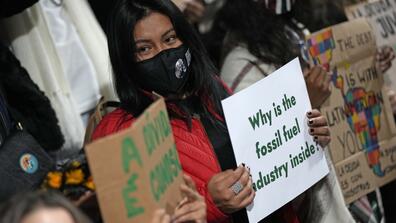
Whether countries will follow through on the commitments made at the Glasgow climate talks is uncertain. “The incentive is to hold back, because each country represents just a small part of the total progress needed,” says Scott Barrett.
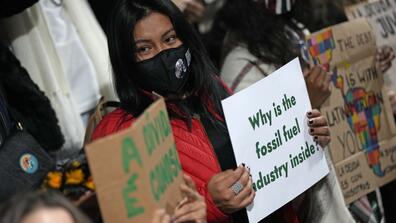
Whether or not countries will follow through on their commitments is uncertain. “The incentive is to hold back, because each country represents just a small part of the total progress needed,” says Scott Barrett.

A look at SIPA’s past, and future, at the intersection of policy and the environment.
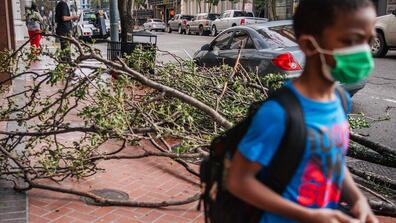
We need global collaboration, coordination, and cooperation in order to address the interlocking threats of a pandemic and environmental crises, says Scott Barrett.

Scott Barrett argues that the accord, which depends on collective action, does not include the kinds of incentives and penalties that would ensure that countries do their part.