Rethinking Global Climate Change Governance
Oct 2009
Economics: The Open Assessment, Open Access E-Journal

Lenfest-Earth Institute Professor of Natural Resource Economics
Focus areas: International Cooperation, Treaties and Customary Law, Environmental and Natural Resource Economics, Infectious Diseases
Scott Barrett’s research explains the reasons why international cooperation succeeds or fails. He has applied this research to a number of topics, including climate change, biodiversity conservation, infectious disease eradication, and ocean governance. Most of his research focuses on the design of treaties and international negotiations. In new work, he has developed a theory of customary international law. His books include Environment and Statecraft: The Strategy of Treaty Making and Why Cooperate? The Incentive to Supply Global Public Goods, both published by Oxford University Press. He has received numerous prizes for his work, and has also played a number of roles in the policy arena, including as lead author of the Intergovernmental Panel on Climate Change, senior lead advisor to the Task Force on Global Public Goods, and member of the World Health Organization’s Strategic Advisory Group on malaria eradication. He is spending the 2026-2027 academic year on sabbatical at Oxford University.
Economics: The Open Assessment, Open Access E-Journal
Health Affairs
Oxford Review of Economic Policy
Harvard Project on International Climate Agreements
Oxford University Press
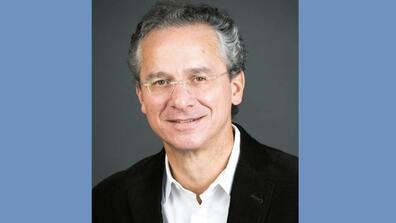
“This outbreak presents an incredible learning opportunity because it just crosses so many issues.... This is a moment for SIPA to stand up,” says Barrett, a leading scholar on transnational and global challenges.

Scott Barrett told Newsweek that the whole world needs to get in on reducing carbon emissions in order to stop climate change from becoming permanent. "To keep temperature well below 2 C, global emissions should start falling very soon, and fall rapidly."

Why do countries that affirm the necessity of avoiding dangerous climate change act in many ways so as to hasten the outcome that they say must be avoided? SIPA's Scott Barrett recalls ecologist G. Hardin and “The Tragedy of the Commons."