Image
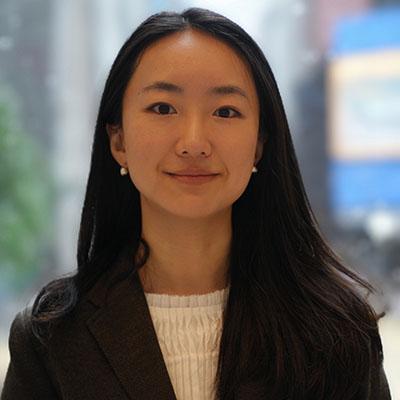
Columbia University’s Climate School Professor Zoey Zhou and Fanyu Wang, a fifth-year PhD student in Sustainable Development at SIPA, published a paper with the Proceedings of the National Academy of Sciences (PNAS) in September about the impact of the US State Department’s international air quality monitoring program. The paper, which was coauthored with Doug Almond of Columbia SIPA and covered by the Washington Post and National Public Radio, found that air quality at monitoring sites around the world declined dramatically in the first six months following the Trump administration’s March 2025 decision to stop the program. Zhou and Wang spoke with SIPA News about their findings.
Your research shows that there is a very significant effect that the State Department’s monitoring program can have. It’s a very useful and low-cost program. What do you hope this intervention or this information will do in terms of public policy and environmental knowledge?
Zoey Zhou: When we think about environmental rights, it actually also includes information access because that will really translate to not only understanding what's going on, but also having scientific evidence to help us guide our behavior. But think about the people, especially those in underdeveloped countries, especially the babies, the seniors who are really vulnerable to those types of air pollution. If they don't even know about what's going on, then the opportunity cost is way too high. And also, we are talking about climate solutions, and many of them are pretty fancy. But technology is not the issue here, and we just want to show that this is such an easy way that can translate to so many individuals' benefit, but probably we're focusing a little bit more on the short-term gain that is saving a few dollars on electricity costs, or something that is relatively minor. I think the conversation should empower us to really incorporate health impacts to our daily balance sheet calculation.
Fanyu Wang: We use this case to show that previous gains, previous improvement in environment governance, are not guaranteed if the tool we have relied upon is removed. We have the case and we have the tools to show for this. I don't think we have any way to directly affect the policymakers, but at least communities can be aware of it.
How did you get interested in this project?
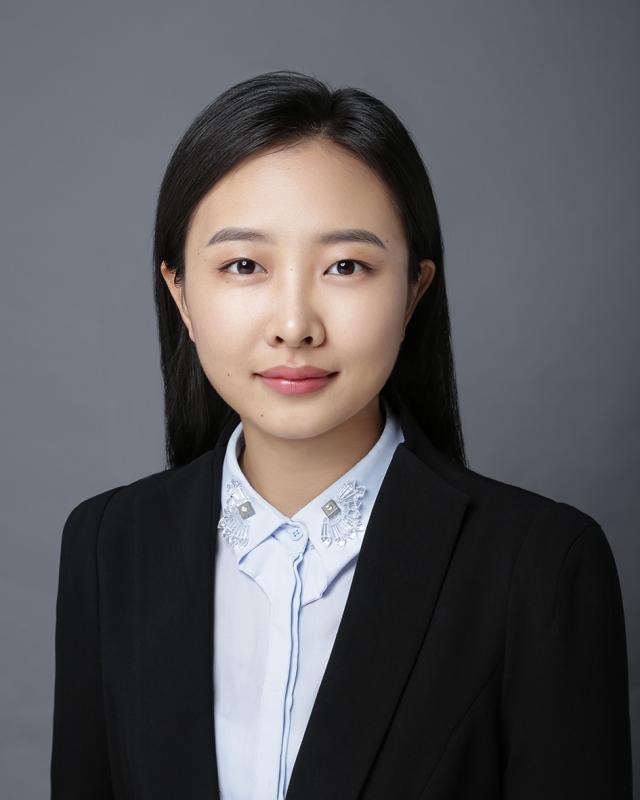
Fanyu Wang: It's always something [that’s been] on my radar, and now we have a case where that information improvement has been rolled back, and the natural questions are what that leads to.
Because the monitoring program was suspended in many of the sites, we now don't have a ground truth [regarding the pollution.] Our goal is to find the best alternative data, and satellite data is a natural choice. The interdisciplinary training in our program is also very helpful here. I took a class at Columbia called landscape analysis that taught us how to analyze satellite data. So I feel comfortable working with that kind of data. We spent time validating the data quality, validating the scope, looking at different data sets, and finding the best data we can use to get the right results.
Zoey Zhou: To give you a little bit of background, Allen [Huang] is a professor of accounting. Accounting is all about information and how that information is a very important governance tool. So in the accounting literature, many regulations are focusing on disclosing more information, like disclosing greenhouse gasses or a supply chain. But then I talked to Doug [Almond], who is also the powerhouse of not only climate but also public health, and we all agree that this is the topic that we should really focus on. So although the idea sounds simple, in order to really answer this question, it actually requires lots of skills, including how to find alternative data, to really know what's going on. We saw in some news coverage that the local communities are frustrated about the change in air quality — there’s some anecdotal evidence, but no one really knows what's the economic meaning for that and how large the impact can be.
Let’s talk about the interdisciplinary nature of SIPA’s climate program and how that helps you find interesting ways into different projects — maybe how it helps you look a little bit differently at what might seem a purely environmental issue.
Fanyu Wang: I think there are two ways, which is really helpful for research. First is it opens up new questions or opens up new angles to look at the existing questions, and second is it gives you new tools. For example, I worked on an information intervention project about water-borne lead exposure and I had to understand the municipal water system and understand the chemistry of water pollutants, which I learned about taking a course in the engineering school. In our program we see all kinds of interesting questions — about ecology, about atmospheric science — they all open up new angles or open up new questions. But the landing point is always social science. Science is always about humans and how to make the society more efficient, more equitable, but the angle it gives you, the interdisciplinary angle, is so unique.
We’re talking during Climate Week, and you both have been so busy, attending meetings and sharing your work. Have you learned anything that is making you hopeful or curious about what comes next, or what projects you might work on next?
Fanyu Wang: I went to the environmental justice convening organized by WE ACT, a Harlem-based NGO. The question there is, how do you correct the legacy problem, the zoning and land use, and make sure that the polluting sources are not within communities? I think there should be very careful planning, and the battleground is actually very local. I think people need to be aware, and the grassroots really need to have support and funding. I don't think the government just disregards those communities, but you need to have the energy and motivation to change the legacy zoning and other issues on the local level.
Zoey Zhou: One of the golden moments that I have is connected to SIPA — a conference organized by Professor Caroline Flammer, which made me wonder if we can think about how to utilize blended finance to help us to solve this planetary issue — not only for climate, but also biodiversity and other related fundamental scarcity assets that we need to really appreciate. I think nowadays we lack the awareness of how important those factors are, and take all those resources for granted. I think it'd be really great to have more private sector and public sector join forces together to solve these issues together.