Image
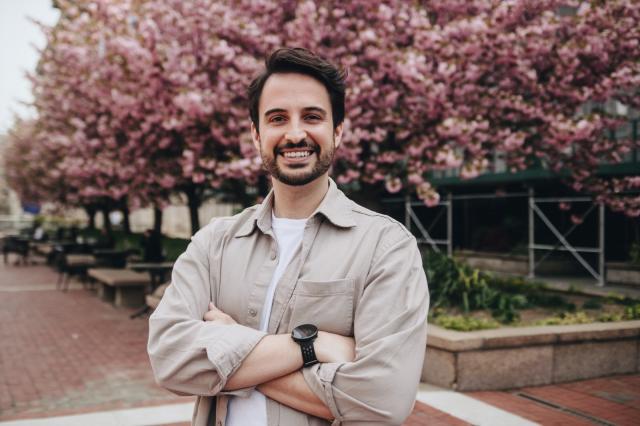
After dedicating his career to Brazil’s education sector, Jose Roberto Baldiva Jr. MPA ’26 chose SIPA to expand his focus to sustainable finance. Drawing from his past experience in social impact, Baldiva has championed opportunities at SIPA for first-generation students while calling attention to Brazil’s environmental initiatives.
Tell me more about your background before SIPA. What led you to your decision to come to Columbia?
I started my career in management consulting, and pivoted to the philanthropic field to transform K–12 education with the Lemann Foundation, a leading Brazilian philanthropy dedicated to supporting public education policies. Most of the work involved establishing partnerships with local municipalities to implement education reforms. When I was [later] invited to be part of the Foundation’s subsidiary, Motriz, a non-profit dedicated to strengthening local governance, I started considering graduate school more seriously.
As the former head of innovation, I was able to partner with international learning organizations, like the India-based NGO Pratham. The mission was to help Brazilian students accelerate their foundational learning skills after the pandemic. It was very eye-opening and I wanted an experience that gave me international exposure to the problems and solutions of the social sector.
What sparked your interest in Development & Governance?
I originally wanted to study urban policy, but decided to go into development because I felt it would open even more possibilities. Because of my previous work in education, I found there was less discussion of the long-term impact of having a good education. It was a good opportunity for me to use the set of tools I had to spend more time on the long-term social and economic next steps. After my first semester, I changed my concentration and decided to pursue an economic development focus with a minor in sustainable finance. I wanted to find new ways of creating financing that would drive impact, like impact investing, blended finance vehicles–anything that could go beyond traditional models and create capital for the social sector.
You were very involved in organizing several events promoting Brazilian culture to the SIPA community. Are there moments that stand out? Do you think you’ve succeeded in showing a more nuanced understanding of the country?
As a Brazilian [at SIPA], it was really important to offer [other] students opportunities to get to know my country. I focused on accessing and challenging [students’] baseline understanding of my country. I helped organize the Brazil Climate Summit, which brought a private-sector perspective to climate solutions in Brazil. I also [helped organize] the Brazil Trek, a 10-day cultural immersion of international students in Brazil.
The Brazil Trek was important in showing more diverse views. People often associate Latin culture with being fun and relaxed, but at the same time, Brazil is also a leader in the social and environmental field. That was something I wanted to show students. In the Climate Summit, my goal was to show an understanding of the private sector’s activities and opportunities to invest in Brazil. It was really cool when after the event, a lot of professors that I invited came to me and said that there was so much they didn’t know about Brazil. Having knowledgeable and respected researchers say this was really gratifying.
What inspired you to lead SIPA’s First Generation Student Union, an organization providing community for students identifying as the first in their family to obtain a bachelor’s degree? Are there moments that stand out?
I’m the first in my family to pursue an undergraduate degree in Brazil, so it was important to build that community here and understand the perspectives of first-generation students. The concept of a first-generation student in Brazil is not well-explored, and it was really during SIPA Fest [in fall 2024] that I was able to meet other students who understood my background. The club gave a name to my identity, and I wanted to provide a welcoming space for other first-generation students.
A moment that stands out to me is a roundtable of first-generation students speaking about building their careers. It was a great moment because the event balanced [career] advice and personal anecdotes well. Most of the time, career talks feel very dry, but this panel combined practical advice with the challenges of being a first-generation student and finding a job. I was really happy when one of the participating students came to me and said, “That was something I was missing after one year of school.” It was a very rewarding moment.
Has there ever been a special mentor or professor during your time here?
Yes, Professor Jenny McGill, the coordinator of the Development concentration. She, for me, is one of the most welcoming and empathetic professors. It was great always having her very close and sharing my fears, challenges, and aspirations for the future with her. The professors I’ve been a reader for – Professor Emanuele Gerratana and Professor Vojislava Cordes – were also very generous with their time and trusted the work I was doing. It’s a lot of responsibility to create these teaching teams, and they were always open to sharing the responsibilities with me and guiding me through.
What are your plans after graduation? Have your professional goals changed since entering SIPA?
Entering SIPA allowed me to learn about other problems in our world. Early on, I had to decide if I wanted to keep focusing on education or if I would be open to other sectors. SIPA gave me the grace of discovering something new while pursuing a graduate degree. At this point, I’m interested in jobs in the climate and sustainable finance space. I’m also interested in opportunities connected to the Global South, because that’s where I feel I need to invest my skills and time.
My plans are either to stay or go back, but I’m very open to going back to Brazil and applying all the skills I’ve learned here to my country. I want to help attract foreign capital to invest in climate solutions in Brazil and help cities adapt to climate change. These are very hot topics, and it’s a good opportunity to facilitate the exchange between Brazil and the international community.