
News & Stories
All News & Stories
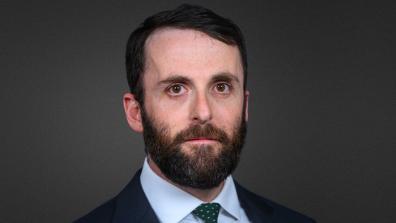
The SIPA Cyber Regulations Watch newsletter sat down with Colin Ahern to discuss how New York approaches cybersecurity regulation.

SIPA’s Master of Public Administration in Development Practice (MPA-DP) and Institute of Global Politics (IGP) Among Key Programs Contributing Expertise

Jen Weedon, a lecturer of Columbia University’s school of International and Public Affairs, who researches best practices in red teaming AI systems, pointed out that where a red team sits in the organizational chart shapes its incentives.
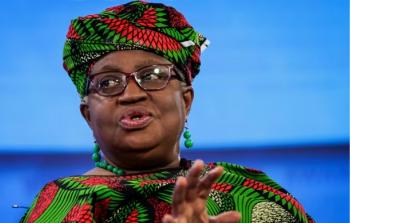
The WTO core still holds, but members must use this crisis to push reform, writes Ngozi Okonjo-Iweala, director-general of the World Trade Organization (WTO) and IGP Carnegie Distinguished Fellow.
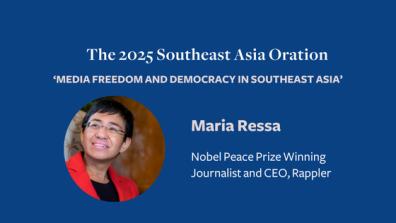
Asialink and the Asia Institute present the 2025 Southeast Asia Oration, with Nobel Peace Prize winning journalist Maria Ressa.
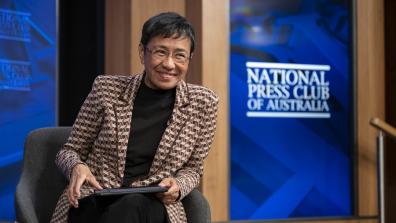
Maria Ressa, 2021 Nobel Peace Prize Laureate and CEO of Rappler, Addresses the National Press Club of Australia.
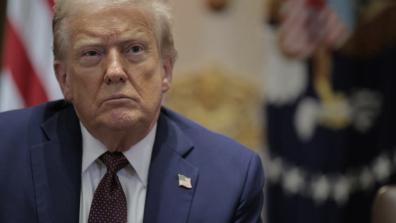
Robert Shapiro, a political science professor at Columbia University, told Newsweek: "Bessent is engaged in partisan wishful thinking, counting on the Supreme Court to uphold executive power...The exception of emergency power here is a stretch—what emergency? The lower courts have seen this. Luckily for Trump, the tariff has appeared to have marginally affected prices and jobs so far, but this is all poised to get worse."

Serbia is a country where corruption is widespread, said Tanya Domi, adjunct professor of international and public affairs.

In response to significant advertising revenue losses of the media, primarily driven by dominance of Big Tech platforms over this market, a policy brief cowritten by Anya Schiffrin calls for the implementation of a broad based digital services tax to fund journalism.
Robert Shapiro, a professor of government at Columbia University, told Newsweek: "Two things are at work. One is genuine Democratic dislike of what is happening in the economy regarding prices, tariffs, etc. and then all the opposition to what Trump has been doing."