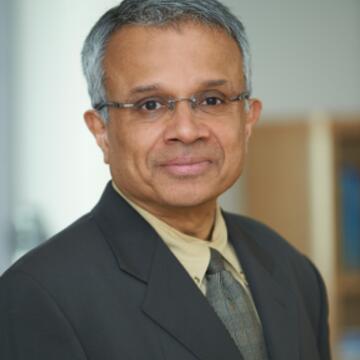
Rajan Menon
Adjunct Senior Research Scholar of International and Public Affairs
Personal Details
Rajan Menon holds the Anne and Bernard Spitzer Chair in Political Science at the City College of New York/City University of New York and is a Senior Research Scholar at the Saltzman Institute of War and Peace Studies at Columbia University and a Global Ethics Fellow at the Carnegie Council for Ethics and International Affairs. Until August 2012 he was the Monroe J. Rathbone Distinguished Professor of International Relations and chairman of the International Relations Department at Lehigh University. He has also taught at Vanderbilt and Columbia Universities.
Menon has served as Senior Fellow at the Council on Foreign Relations, Fellow at the New America Foundation, Senior Fellow at the Atlantic Council, Visiting Fellow at the Harriman Institute (Columbia University), Senior Advisor and Academic Fellow at the Carnegie Corporation of New York, and Director of Eurasia Policy Studies at the National Bureau of Asian Research NBR). He has received fellowships and grants from the Woodrow Wilson International Center for Scholars, the Carnegie Corporation, the National Council for Soviet and East European Research, the Rockefeller Brothers Fund, and the Council on Foreign Relations.
His books include The Conceit of Humanitarian Intervention, (Oxford University Press 2016); The End of Alliances (Oxford University Press, 2007); Ukraine in Conflict: The Unwinding of the Cold War Order (MIT Press, 2015), coauthored with Eugene B. Rumer; and Soviet Power and the Third World (Yale University Press, 1986). His next book, What Will American Fight For? is being written under contract from Polity Press.
Recent articles include: “There is No Military Path to Victory in Afghanistan,” The National Interest (online), September 14, 2016; “The India Myth,” The National Interest (November-December 2014) “Asia’s Looming Power Shift,” The National Interest (September/October 2013); “R2P: It’s Fatally Flawed,” The American Interest,”(July/August 2013); “Prisoners of the Caucasus: Russia’s Invisible Civil War,” Foreign Affairs (July/August 2010); “Breaking the State,” National Interest (May/June 2011), “Counterrevolution in Kiev: Hope Fade for Ukraine,” Foreign Affairs (November/December 2011); “When America Leaves: Asia After the Afghan War,” The American Interest (May/June 2012); and “Why Beijing and Moscow Oppose Intervention,” Current History (November 2012).
He blogs at the Huffington Post and writes monthly for The National Interest (online edition). His opinion pieces have appeared in the International Herald Tribune (now the Global New York Times), The Los Angeles Times, Newsweek, CNN.com, Christian Science Monitor, Financial Times, Boston Globe, Newsday, Chicago Tribune, and washingtonpost.com. He has been a commentator on NPR, ABC, BBC, CNN, MS-NBC, the Australian Broadcasting Corporation, the Canadian Broadcasting Corporation, and France TV-24.
Education
-
PhD, University of Illinois at Urbana-Champaign
In The Media

The next few months may prove among the most consequential of this war, writes Rajan Menon
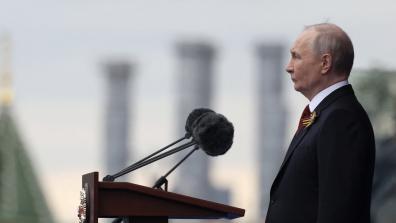
"A battered economy, huge numbers of casualties and very little territorial gain – it’s no wonder even stalwart Putin supporters are showing signs of disquiet," writes Rajan Menon, Adjunct Senior Research Scholar of International and Public Affairs.

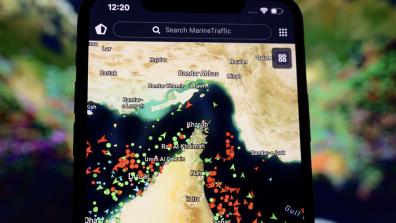
Adjunct Senior Research Scholar Rajan Menon on the U.S.-Israel war with Iran: "The chasm between the two sides remains vast. Absent compromises and adept diplomacy, the conflict will almost certainly reignite."
"Unlike the United States, which feels it must be able to project power worldwide, all Europeans need to do is protect their continent—a far more feasible task," writes senior research scholar Rajan Menon.
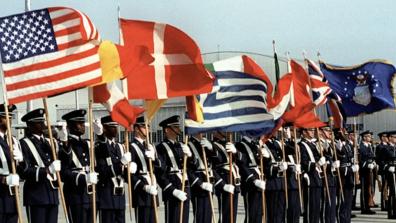
Rajan Menon, senior research scholar at the Saltzman Institute, rejects the assumptions that Europe can't defend itself without the U.S., claiming that this mindset is the product of decades of American strategy. Menon shows how Europe's chosen dependence could be overcome, and why the Trump era makes it both possible and necessary.