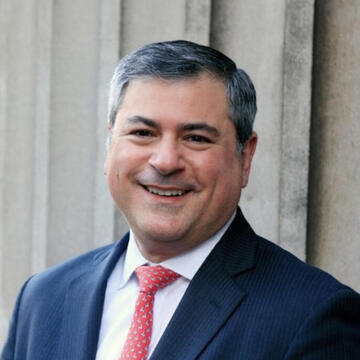
Jason Bordoff
Professor of Professional Practice in International and Public Affairs
Personal Details
Focus areas: Economics, Energy, Environment, and National Security
Jason Bordoff is the Founding Director of the Center on Global Energy Policy at Columbia University’s School of International and Public Affairs, where he is a Professor of Professional Practice. He is also on the faculty of the Columbia Climate School, where he is Co-Founding Dean Emeritus.
He previously served as Special Assistant to President Barack Obama and Senior Director for Energy and Climate Change on the Staff of the National Security Council. Prior to that appointment, he held senior policy positions on the White House’s National Economic Council and Council on Environmental Quality. Earlier in his career, he was a scholar at the Brookings Institution, served in the Treasury Department during the Clinton Administration, and was a consultant with McKinsey & Company.
One of the world’s leading energy and climate policy experts, Bordoff’s research and policy interests lie at the intersection of economics, energy, environment, and national security. As a member of the Columbia SIPA faculty since 2013, he teaches and mentors the world’s future energy and climate leaders in government, business and civil society.
In 2013, Bordoff created the Center on Global Energy Policy (CGEP), which is now widely recognized as among the world’s leading energy policy research institutes, advancing evidence- based and actionable energy and climate solutions through research, dialogue, and education. (Learn more here.) In addition to serving as CGEP’s Founding Director, Bordoff co-led and created the nation’s first graduate school devoted to tackling climate change, the Columbia Climate School, from 2021 to 2023. Bordoff is a columnist for Foreign Policy Magazine and has authored numerous essays and articles for Foreign Affairs. He frequently publishes articles in leading outlets such as The New York Times, The Wall Street Journal, Financial Times, The Economist, and appears on NPR, CNN, NBC, Bloomberg, CNBC, CBS, and the BBC as a commentator. His Foreign Affairs article with Meghan O’Sullivan, “Green Upheaval: The New Geopolitics of Energy,” was selected as one of the “Top Ten” print articles published in that journal in 2022.
Bordoff has extensive experience advising the private sector and non-profit organizations. He is a Senior Advisor at Permira, a global investment firm. He serves on the Temasek Sustainability Advisory Panel, and on numerous advisory boards and leadership councils, including the Federal Reserve Bank of Dallas, Sustainable Energy for All at the United Nations, The Nature Conservancy of New York, Foreign Policy 4 America, the New York Energy Forum. He is a member of the Council on Foreign Relations, the Trilateral Commission, the Oxford Energy Club, and is a Distinguished Fellow at the Institute of Energy Economics, Japan. Bordoff graduated with honors from Harvard Law School, where he was Treasurer of the Harvard Law Review, and clerked on the U.S. Court of Appeals for the D.C. Circuit. He also holds an MLitt degree from Oxford University, where he studied as a Marshall Scholar, and a BA magna cum laude and Phi Beta Kappa from Brown University.
Education
- Harvard Law School: J.D. with honors
- Oxford University: M.Litt. (Marshall Scholar)
- Brown University: B.A. magna cum laude, Phi Beta Kappa
Affiliations
- Council on Foreign Relations
- Association of Marshall Scholars
Research and Publications
In The Media
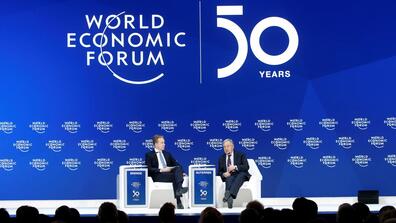
Previously referring to Davos as having turned into a climate change meeting, Jason Bordoff says there are cheap hydrocarbons and other forms of oil alternatives that can be looked to as forms of energy.
“Davos turned into a climate-change conference this year,” said Jason Bordoff, but the gap between ambition and concrete action remains glaring.

The US became a net exporter of petroleum oil in September for the first time since records were kept in 1949. Jason Bordoff says Trump gets no credit. "The rapid rise in US oil production began before Pres. Trump and would very likely have continued."

In his latest piece for the Wall Street Journal, Jason Bordoff writes how California’s decade of planned blackouts should encourage regulators to boost a resilient electrical system.
Jason Bordoff notes that the modest size of the resource, risk of conflict, and legal obstacles to investment from U.S. sanctions make it unlikely that a U.S. oil major would find it commercially attractive to invest in the Syrian oil sector.