Image
SIPA-UNITAR Series on Negotiation and AI
|
|
||
|---|---|---|
| Time (EST): 9:00am-5:00pm |
Format: In-Person and Online |
Tuition: $5,395 Online* $6,895 In-Person** |
| Application deadline: TBD |
Location: Columbia University and United Nations*** |
Payment deadline: TBD |
| Certificate: AI and Decision-Making |
||
Learn to apply AI and data science tools to enhance executive decision-making, risk assessment, strategic planning, and crisis forecasting in international and diplomatic contexts.
*$4,316 reduced online tuition for Columbia alumni and groups
**$5,516 reduced in-person tuition for Columbia alumni and groups
***Subject to venue availability and approval
Artificial Intelligence (AI) presents both significant opportunities and complex challenges for multilateral negotiation and international cooperation, presenting the potential to enhance institutional efficiency, improve analysis of complex issues, support consensus-building, and strengthen evidence-based decision-making, while also raising important ethical, regulatory, and governance concerns. In response to these opportunities and challenges, the United Nations Institute for Training and Research (UNITAR) and the Columbia University School of International and Public Affairs (SIPA) are partnering to deliver an Executive Program Series on Negotiation and Artificial Intelligence (AI). The series will equip leaders and practitioners with the knowledge and skills needed to navigate the opportunities, risks, and implications of AI in negotiation, diplomacy, and international cooperation.
AI is increasingly shaping how senior leaders and decision-makers navigate complex, uncertain, and time-sensitive decisions. As AI-enabled systems support the synthesis of information, risk assessment, and strategic foresight, leaders are required to understand not only what these tools can offer, but also how to exercise judgment, accountability, and oversight in AI-supported decision environments. The final program in the series will examine the strategic implications of AI for executive-level decision-making across public and international contexts.
Designed for senior professionals, the third program in the Columbia SIPA-UNITAR Executive Series on Negotiation and AI will focus on strengthening participants’ capacity to assess when and how AI can add value to decision-making processes, while safeguarding institutional responsibility and credibility. Through high-level discussions and applied reflection, participants will develop the confidence to integrate AI-informed insights into leadership practices, ensuring that technology enhances, rather than substitutes, sound judgment and effective decision-making.
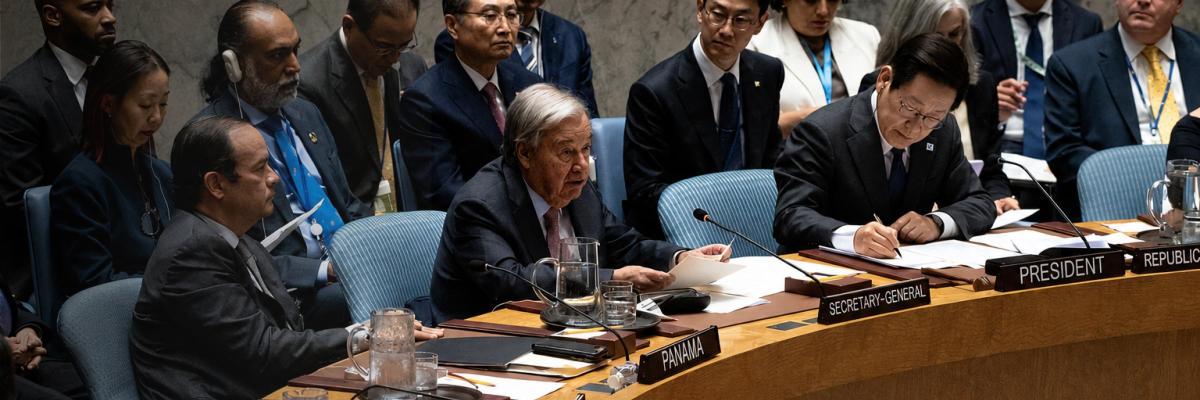
To launch the Executive Program Series, Columbia SIPA and UNITAR recently hosted a roundtable on July 22. The UNITAR - Columbia SIPA: Multilateral Dialogue on Artificial Intelligence (AI) examined how AI is transforming international cooperation, global governance, and decision-making. The session also offered an exclusive preview of the upcoming Executive Program Series on Negotiation and AI.

Designed for senior professionals, the course will focus on strengthening participants’ capacity to assess when and how AI can add value to decision-making processes, while safeguarding institutional responsibility and credibility. Through high-level discussions and applied reflection, participants will develop the confidence to integrate AI-informed insights into leadership practices, ensuring that technology enhances, rather than substitutes, sound judgment and effective decision-making.
Attention will also be given to the strategic implications of agentic and multi-agent systems, digital twinning for advanced situational awareness, synthetic media and provenance tooling, and the longer-term diplomatic consequences of potential developments in quantum computing and post-quantum cryptography.
The program will be delivered over a one-week period and will be jointly designed and delivered by UNITAR and SIPA. The sessions will be delivered in a blended format, utilizing a hybrid mode of instruction to enable participants to join the sessions either in-person or online. The in-person sessions of the program will be held on the campus of Columbia University and at the United Nations Headquarters in New York City (subject to venue availability and approval). This flexible delivery model is intended to maximize global reach and impact.
Instructional methodologies will include a range of interactive lectures, stakeholder discussions, high-level roundtables, and site visits, as well applied exercises to give participants practical, hands-on experience utilizing AI technologies to analyze scenarios, evaluate strategic options, make more informed decisions, and strengthen their negotiation skills in high-stakes environments. These tabletop exercises will incorporate real-world case studies and interactive simulations using cutting-edge research tools, forecasting platforms, situational awareness dashboards, and negotiation simulators, bringing together the appropriate focus of theory and applied methods in emerging technologies and negotiation.
Participants will not only have the opportunity to learn from some of the world’s leading experts on Negotiation and AI but also their peers working at the forefront of AI policy, diplomacy, and governance to learn how AI challenges and opportunities are being addressed across different national and institutional contexts and sectors.
Participants in the Executive Program Series on AI and Negotiation will gain access to a range of professional, academic, and networking benefits designed to support their leadership development and career advancement in an increasingly AI-enabled global environment.
The Executive Program Series on Negotiation and AI is taught by world-renowned academics, researchers, and practitioners from Columbia University; the United Nations Institute for Training and Research (UNITAR); the United Nations University Centre for Policy Research (UNU-CPR); the Center for International Cooperation at New York University (CIC); the EPFL Swiss Federal Technology Institute of Lausanne; the International Peace Institute (IPI); the Carnegie Endowment for International Peace, the Norwegian Institute of International Affairs (NUPI); the Carnegie Council for Ethics in International Affairs (CCEIA); and the London School of Economics, and other leading institutions who are shaping the future of AI governance, multilateral cooperation, and diplomacy. The program offers an opportunity for participants to expand their professional networks and learn from some of the world’s foremost experts on Negotiation and AI.
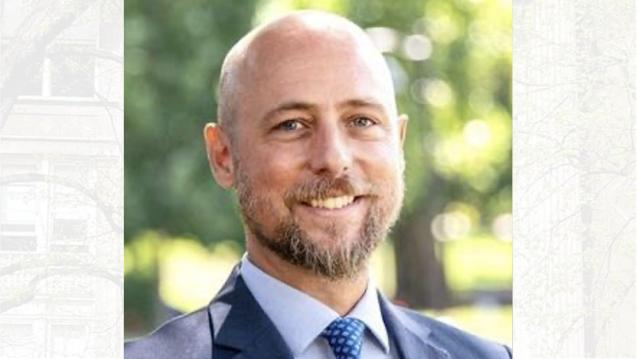
Eduardo Albrecht is an Adjunct Professor of International and Public Affairs at Columbia SIPA and the author of Political Automation. He is a former senior fellow at the UN University’s Centre for Policy Research—where he conducted research on the use of AI technologies in UN conflict prevention and response—and a former fellow at IPI and EIAS.
Read full bio »
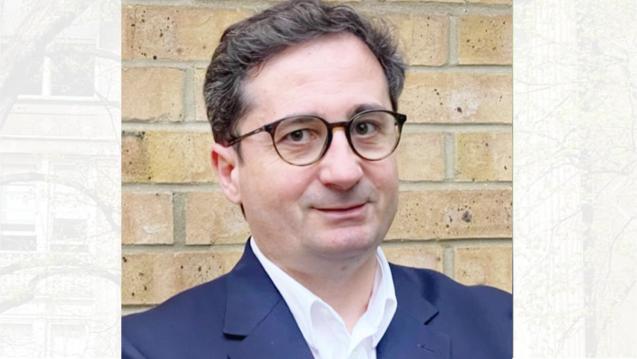
Andrea Cavallaro is a Full Professor at EPFL Swiss Federal Technology Institute of Lausanne and a Fellow of the Higher Education Academy, a Fellow of the International Association for Pattern Recognition, and a Fellow of the European Laboratory for Learning and Intelligent Systems. His research focuses on machine learning for multimodal perception
Read full bio »

Paige Arthur is the Director of Global Programming at Columbia Global, Columbia University. Before her current role, she served as a senior fellow at the NYU Center on International Cooperation. She recently co-authored AI for Peace, a book exploring the advancements in AI technologies and their applications in peacebuilding.
Read full bio »

Anu Bradford is a leading scholar on digital regulation, and is the Henry L. Moses Professor of Law and International Organizations and Director of the European Legal Studies Center at the Columbia Law School, a senior scholar at the Columbia Business School, a nonresident scholar at the Carnegie Endowment for International Peace.
Read more >>

Emmanuelle Cousin serves as Lead for Mediation Initiatives and Special Adviser to President to Zeid Ra’ad Al Hussein at the International Peace Institute (IPI), where she oversees high-level, discreet Track 1.5 mediation initiatives that that bring together diplomats, civil society, and policy experts to bridge formal and informal processes.
Read more >>

Andreas Hirblinger is a senior research fellow at the Norwegian Institute of International Affairs, author of Digital Peacebuilding? The Socio-Technicality of Transforming Armed Conflict, and former researcher at the Peace Research Institute Oslo (PRIO), and the Centre on Conflict, Development and Peacebuilding (CCDP) at the Geneva Graduate Institute.
Read more >>
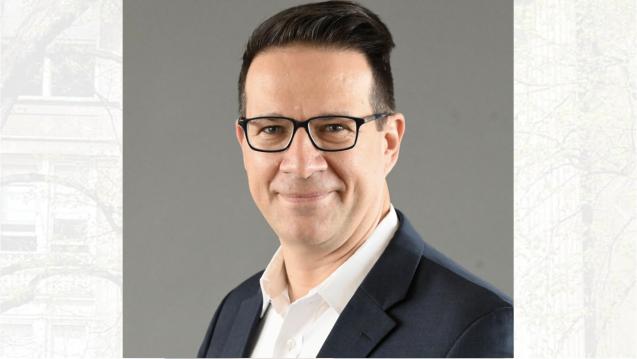
Daniel Naujoks is a Lecturer in the Discipline of International and Public Affairs at Columbia SIPA where he focuses on international migration and development. He has worked for UNDP, the UN Population Division, UNICEF, the EC-UN Joint Migration and Development Initiative, and the International Labour Organization (ILO).
Read more >>

Branka Panic is the Founding Director of AI for Peace, a Non-Resident Fellow at the Center for International Cooperation at NYU, and a TEDx speaker on AI and peace. Named one of the 100 Brilliant Women in AI Ethics and a She Shapes AI 2024/25 winner, she is the author of Foreign Policy at the AI Frontier and co-author of AI for Peace.
Read more >>
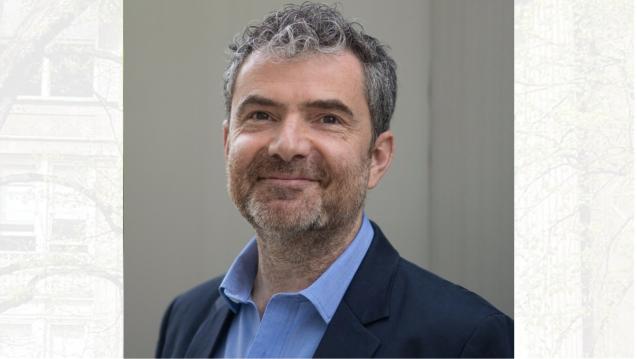
Emrys Schoemaker is a Senior Fellow in Digital and Frontier Technologies at UNU-CPR, where he focuses on the governance of AI, data, and digital infrastructure. He leads the Global Digital Governance Lab and the Digital Sovereignty Observatory at the Graduate Institute Geneva and is a Visiting Fellow at the London School of Economics.
Read more >>
The training program is designed to build the capacities of a diverse cohort, including diplomats, delegates, international civil servants and policymakers, academics, and professionals working across the public and private sectors.
Given the senior level of the intended cohort, the program will assume working familiarity with multilateral or executive contexts and will be calibrated to the practical demands of working with AI in professional settings, equipping participants to deploy, evaluate, and govern these tools in their own institutions.
The program will be conducted in English, hence fluency in English is a requirement for participation.
Applications for the program will be accepted through September 7, 2026. Applications are reviewed on a rolling basis, and qualified candidates may receive admission decisions prior to the application deadline. As spaces are limited, prospective participants are encouraged to submit their applications as early as possible to ensure full consideration. Successful applicants will receive additional information regarding enrollment, program logistics, and pre-program preparations following their acceptance.
Learn from two of the world's leading institutions on international affairs and diplomacy. Understand the new dynamics of negotiation and decision-making. Prepare to lead in an AI-enabled world.

The Picker Center for Executive Education
Laura McCreedy
Manager of Executive Education
Email Exec Ed Manager
Columbia University | SIPA
Picker Center for Executive Education
118th Street, Room 400
New York, NY 10027
P: +1 212-854-0791