Image


Skills for Managing Risk and Change
In today’s interconnected world, leaders must navigate global crises, natural disasters, and rapid change. This course equips participants with the tools to prepare for, adapt to, and effectively manage complex challenges, while inspiring others to act with purpose and confidence.
Through practical frameworks and real-world applications, participants will explore how to operate in diverse and dynamic environments, integrating strategies in strategic communication, crisis management, conflict resolution, and collaboration. The program emphasizes actionable insights that can be immediately applied to enhance both personal effectiveness and organizational performance. This intensive two-day program brings together these critical skill sets, leaving participants with new expertise they can deploy right away to drive meaningful impact.
Designed for professionals from government agencies, nonprofit organizations, and the private sector, the course supports organizations seeking to strengthen leadership capacity in times of uncertainty. The program can also be customized to align with the specific priorities, challenges, and context of your organization. The program is designed and delivered in collaboration with Worldview Global Impact, a New York–based nonprofit organization.
This is an Executive Certificate Course and at the conclusion of the two days, all participants will receive a formal Certificate of Participation from Columbia University and Worldview Global Impact.
This is a two-day professional skills training workshop that is appropriate for working professionals in government, private-sector companies, and non-profit organizations, as well as university students at the graduate or advanced undergraduate levels. The program is designed for a cohort of a minimum of 25 and maximum of 60 students.
The program is delivered in a hybrid format, combining live instruction and mentorship with curated recorded video sessions from senior Columbia faculty. Leveraging pre-recorded lectures, the program can be efficiently delivered multiple times across different locations and tailored to diverse audiences.
The course is conducted in English and can be delivered in person at a location of your choice. Simultaneous interpretation for in-person sessions and subtitling for online lectures can be arranged upon request.
Sponsor

This intensive course offers a unique opportunity for mid- to senior-level managers, professionals across sectors, and emerging leaders to develop a deeper understanding of the core leadership skills required to navigate crises. The program strengthens participants’ ability to recognize and manage the complexities of large-scale organizations and high-stakes situations, from operational execution to policy and strategic decision-making.
The topics of the workshop can be adjusted to address the specific professional goals and challenges of the participant group.
Technology and Global Change
This first day will examine how new technologies are affecting leadership and how leaders can understand and mobilize tech innovation to be more effective.
Crisis Leadership
These sessions examine human performance in a crisis and how leaders can encourage others to adapt to extreme events in our globally connected era.
This intensive two-day course is divided into modules which can be adjusted according to the needs of the participant groups: some can be emphasized and others de-emphasized or replaced with other modules.
Global Impact Leadership Skills
Module 1: Introduction to key leadership concepts
Module 2: How to understand impact leadership
Module 3: Classic theories of leadership: traditional views from a global perspective
Module 4: Bureaucracy, authority, and hierarchy
Module 5: Charismatic leadership: when it works and when it does not
Module 6: Practical skills to confront challenges: key theories of Peter Drucker, James McGregor Burns, Michael Bloomberg
Module 7: Four key impact leadership strategies: leaders as followers
Module 8: The Complete Global Impact Leader: exercising and following authority (with contemporary case studies)
Crisis Leadership and Risk Management Skills
Module 1: Introduction of leadership in crisis situations: how to make effective decisions
Module 2: Listening and responding to experts and colleagues
Module 3: Using data and information for crisis decisions/understanding economic and financial risk
Module 4: Evaluating “trade-offs”: how to assess the negative and positive consequences of risk management choices
Module 5: Technology as a risk-management tool
Module 6: Natural disaster response (with contemporary case studies)
Module 7: AI: powerful benefits and present dangers
Module 8: Creating a comprehensive risk management strategy program
The suggested timing and delivery format of the program are meant to be illustrative and can be adjusted to align with your organization’s specific needs and preferences. The program can be scheduled as early as 2026 or at a later time, with flexibility to tailor the timing, structure, and delivery approach accordingly.
| Day 1 | |
|---|---|
| 9:00-9:15 | Introduction to Day 1 workshop content and process |
| 9:15-10:30 | Session 1: Global Impact Leadership (Modules 1-2) |
| 10:45-12:00 | Session 2: Global Impact Leadership (Modules 3-4) |
| 12:00-1:30 | Networking Lunch |
| 1:30-2:45 | Session 3: Global Impact Leadership (Modules 5-8) |
| 3:00-5:00 | Group exercises (Part I) |
| Day 2 | |
|---|---|
| 9:00-9:15 | Introduction to Day 2 workshop content and process |
| 9:15-10:30 | Session 1: Leadership in Crisis Situations (Modules 1-2) |
| 10:45-12:00 | Session 2: Risk Management Skills (Modules 3-4) |
| 12:00-1:30 | Networking Lunch |
| 1:30-2:45 | Session 3: Technology and AI for Risk Management (Modules 5-8) |
| 3:00-5:00 | Final group exercise presentations and course summary |
| 5:00-7:30 | Certificate award ceremony and networking dinner |
The course is taught by world-renowned academics, researchers, and practitioners from Columbia University’s School of International and Public Affairs (SIPA) and is moderated by Dr. Robin Lewis, former Columbia University professor and Academic Dean and Co-Chair of Worldview Global Impact (WGI), a New York-based non-profit foundation.
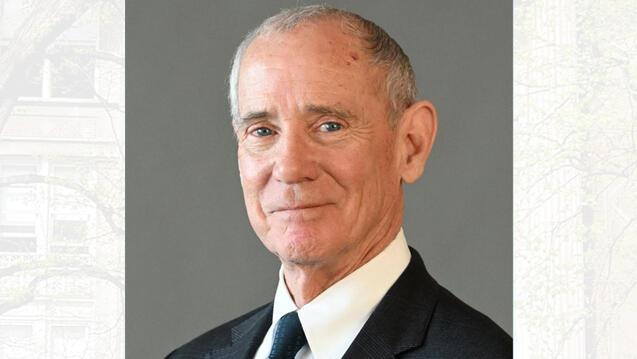
William Eimicke, Ph.D.
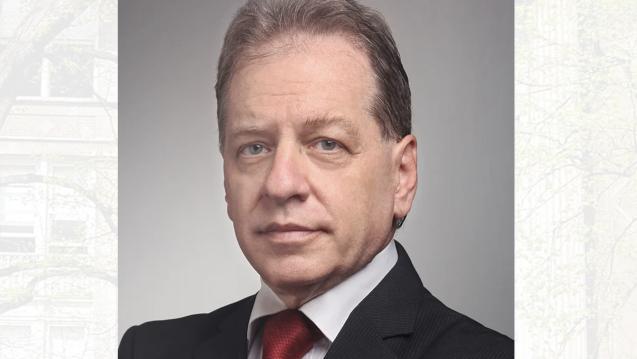
Robin Lewis, Ph.D.

Jasmine Wang

The Picker Center for Executive Education
Laura McCreedy
Manager of Executive Education
Email the Picker Center
Cheng Peng
Program Coordinator
Email the Coordinator
Columbia University | SIPA
Picker Center for Executive Education
118th Street, Room 400
New York, NY 10027
P: +1 212-854-0791
Visit the Picker Center