Image
Image
The Hunger Project’s (THP) Epicenter Strategy aims to build a path to sustainable self-reliance for individuals by bolstering their confidence to become leaders of their own development. One of the key elements of this strategy has been access to financial services like savings, loans and micro insurance to partner communities through the Microfinance Program (MFP). This program intends to pave the way to a better quality of life for these communities through economic independence and improved access to education and healthcare.
A team of seven SIPA graduate students consulted THP’s Monitoring, Evaluation and Learning (MEL) department and conducted a formative evaluation of the data collection and management system in place for its Microfinance Program in eight African countries. The purpose of the evaluation was to diagnose key challenges in the data collection and flow process from the epicenter to country and global levels, as well as to understand how the data received by THP’s Global Office could be more timely and accurate. This in turn would help them assess the health of the epicenter rural banks more effectively.
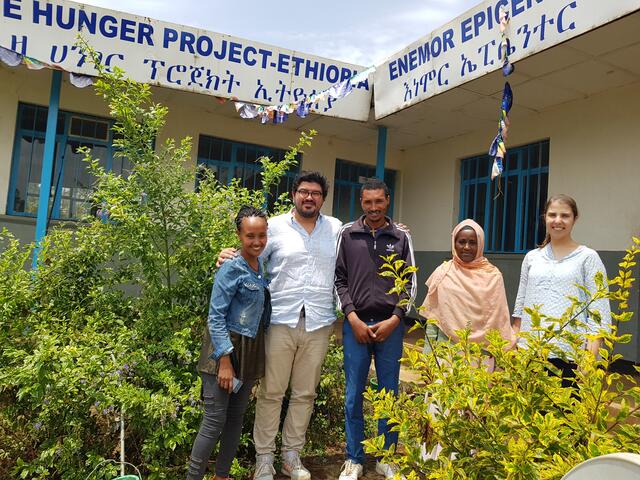
The final report draws on findings from 51 semi- structured interviews with a wide range of experts and stakeholders conducted during three field visits to Uganda, Ethiopia and Malawi and remotely with the non-visited five countries of Benin, Burkina Faso, Ghana, Mozambique and Senegal to understand the data flow across the continent. The SIPA team identified several factors that influence the quality and timeliness of the MFP data received by the Global Office. Based on these findings, the team developed recommendations for the client pertaining primarily to organization and staff structure, education and training, operational limitations regarding infrastructure, process and tools for data collection, and organizational communication. In addition, the team also cited a number of items for consideration to further investigate existing fissures in the MFP data collection process that if addressed, could position THP to better collect and share quality MFP data in a timely manner, assess the health of the rural banks and continually improve the MFP program over time.