Image
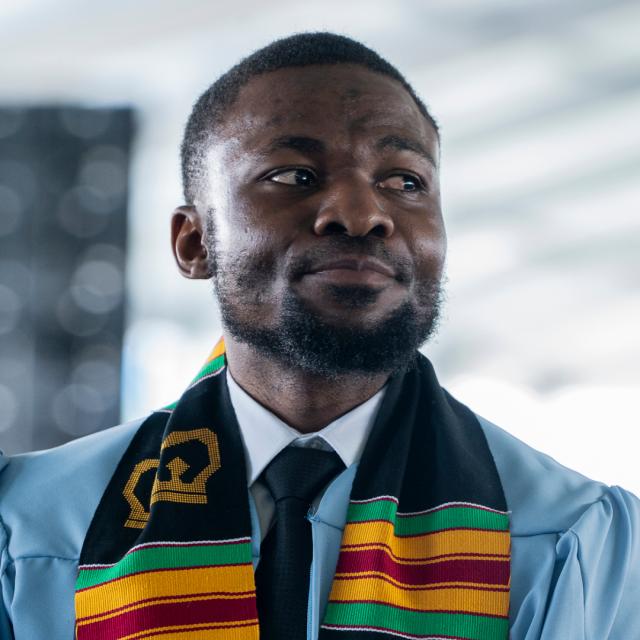
The air at Roberts International Airport was thick with salt and farewell. On July 30, 2017, as I stood on the tarmac, the Atlantic breeze carried not just heat but the weight of departure—one that families across the Global South know intimately. My siblings clung to me, their small hands wrapped tightly around mine as if their grip could stall time. My father, usually stoic, stood still, the slight tremor in his right hand undoing the calm he tried to project. My mother pressed her weathered hands into mine and whispered, "Take care of yourself." No grand speeches. Just the dignified choreography of sacrifice: fear beneath pride, prayers beneath breath.
I was leaving to wave the flag for Liberia at the 20th Session of the UN Youth Assembly, held at UN headquarters in New York City from August 9 to 12, 2017. For me, this trip represented a leap into greater purpose—carrying my family's dreams and my nation's heartbeat across borders.
On the plane, I sat beside Kwame, a Ghanaian businessman, who shared how, during his first visit to the US, he tried tipping a Manhattan police officer. "The officer stepped back like I'd offered him something illegal," he said with a laugh. "Nearly arrested me!" His tale eased my anxiety, but it also made me reflect: What bridges do our shared stories and laughter truly build in these fleeting encounters? We went on to swap memories of beloved Ghanaian and Liberian traditions—our debates over whose country made the best jollof rice, our mutual obsession with football, and the similarities in our family structures. At 30,000 feet, our commonalities outshone our differences with little effort. But would these threads of connection be enough to anchor me in the unfamiliar world that awaited below?
Landing at JFK Airport on July 31 felt like immersion into a new syntax. From August 1 to 5, I explored Manhattan methodically. Yellow taxis weaved between pedestrians; vendors shouted prices in Spanish, Bengali, and Arabic; and the scent of diesel and roasted peanuts filled the air. New Yorkers moved in tacit coordination, performing rituals of speed and solitude. I observed the city as an ethnographer might, decoding its tempo.
Monrovia, by contrast, pulsed with relational rhythms—market women calling out greetings, the sizzle of plantains, the music of bargaining. Both cities stretched to accommodate their people, but their codes of engagement were incompatible. Was I adapting to New York or translating myself into its idiom? In these moments, I learned that identity is not fixed but negotiated.
The subway was my crucible of cultural adjustment. "Stand clear of the closing doors, please," echoed daily. No one acknowledged anyone else. Yet everyone made space. It was orderly, silent, and disorienting. In Monrovia, proximity meant intimacy; here, it meant anonymity. But in that anonymity, I discovered a paradoxical freedom. In Liberia, I was the son of a third-grade dropout, burdened by inherited limits. In New York, I was a delegate, my name badge a passport into dialogue. Identity, I realized, is not inherited but performed, reshaped by context.
At the Assembly, I encountered a different kind of diplomacy. Between sessions on youth leadership and climate resilience, I met Aissatou from Senegal. She sketched water conservation trenches on a napkin, explaining how her village reduced erosion by 40 percent through community innovation. "You could adapt this for coastal Liberia," she said, drawing concentric circles. Her knowledge was not academic; it was ancestral. Her presence challenged the vertical flow of development knowledge and embodied what scholars term "horizontal knowledge exchange."
The Assembly ended on a triumphant note, but on August 13, the narrative ruptured. A cough, once trivial, turned severe. My host, Mr. Kenneh, rushed me to the emergency room at Bronx-Lebanon Hospital. The diagnosis landed like a verdict: mycobacterium tuberculosis. My flight home, my plans, and the policy ideas I had hoped to implement all dissolved into the sterile stillness of a hospital room.
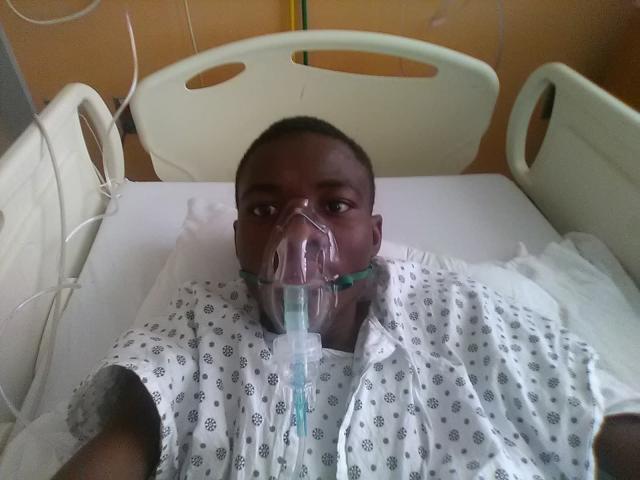
There, illness became a portal. The hospital was no longer a site of retreat but of immersion. Nurse Gloria from the Philippines became my anchor. As she changed my IV, she taught me Tagalog for "Thank you": Salamat po. I taught her how to say my name, Mustapha, in Liberian cadence. One night, she admitted, "Sometimes I feel split between two worlds." Her words resonated. Migration, I realized, is not always movement; sometimes it's the stillness of suspended belonging.
Carlos, a respiratory therapist from Ecuador, asked about Liberian cuisine. I described cassava leaf stew, rich with palm oil and hot peppers. The next day, he brought a warm empanada. "Different ingredients, same comfort," he said. These were not just gestures of kindness—they were acts of cultural diplomacy. The hospital became a third place—what sociologist Ray Oldenburg calls a place of informal public life. Here, care was reciprocal, not hierarchical.
These encounters dismantled the hierarchy of observer and observed. In the Assembly, I was the voice. In the hospital, I was the body. My vulnerability created space for authenticity. In Gloria and Carlos, I saw not just caretakers but cultural interlocutors. We were no longer navigating differences; we were building intimacy across them.
When I was discharged, 50 pounds lighter but metabolizing meaning, I stood at the hospital entrance. A taxi driver called, "Where to, my friend?" His Bengali accent—once undifferentiated to my ears—now rang clear. As we drove through the Bronx, I realized I had become what cultural theorist Homi Bhabha calls a "translated being"—not just adapting, but transformed.
My journey from Monrovia's tarmac to a Bronx hospital bed was not simply a trip; it was a reconstitution of self. Kwame's cautionary tale, Aissatou's concentric wisdom, Gloria's Salamat po, Carlos's empanada—each moment translated me further. This odyssey taught me that the borders we navigate go beyond physical boundaries; they are invitations to embrace change and discover our commonalities. I left Liberia as a delegate. I became a carrier of worlds. Liberia lives in my blood, America in my breath, and between them, the language.
The Raphael Smith Memorial Prize is given in memory of Raphael Smith, a member of the Class of 1994 who died in a motorcycle accident while retracing his stepfather’s adventure of motorcycling from Paris to Tokyo. The prize, established by his family and friends, is awarded annually to two second-year SIPA students for travel articles that exemplify the adventurism and spirit of SIPA. The winners of this year’s contest are Mustapha Dukuly MPA ’25 and Adalí Frias Deniz MIA ’25.