Image
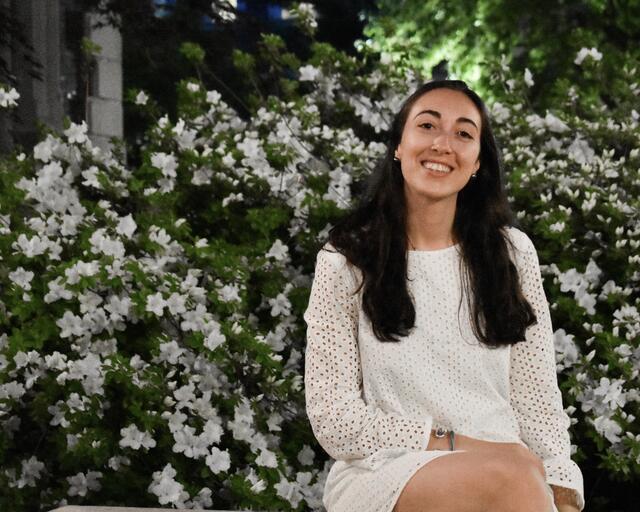
As a dual-degree alumna, Clara Ceccanti MIA ‘19 earned an MSW from Columbia’s School of Social Work in conjunction with her SIPA degree. She completed her field placement for social work in the Bellevue Hospital Victim Services Program and also worked for UN Women, in particular its efforts to end violence against women.
Now a licensed master social worker, Clara is currently employed in a clinical capacity at NYC’s Mount Sinai Hospital. She works with refugees and immigrants in our region, and also provides psychosocial support to survivors of gender-based violence.
The following interview, part of a series conducted by Ahmad Jamal Wattoo MPA ’21, has been condensed and edited for clarity.
What prompted you to pursue degrees in both international affairs and social work?
I wanted to bridge the gap between mental-health care and responses to gender-based violence in the humanitarian sector. I was drawn to work with survivors of gender-based violence and sought to gain tools to work as a mental-health practitioner and policy analyst—to unfold the best prevention and intervention strategies related to gender-based violence while providing individual support to survivors of violence.
Which courses would you recommend to current SIPA students?
I particularly enjoyed Professor Yasmine Ergas’s Regulating Reproduction, a course designed to analyze the history of women as vessels for reproduction. The class was extremely interesting, and provided students with the opportunity not only to review historical, feminist, and legal literature on the subject, but also to be cognizant of the inherent privilege often attached to the very object of reproduction, and caregiving itself—based on sex, gender, representation, race, class, and ethnicity.
International Human Rights Law and Gender, Globalization, and Human Rights [were two classes that] provided me with excellent foundations as a student interested in mastering skills in the fields of advocacy and jurisprudence.
What was your Capstone project at SIPA? What were the highlights of that experience?
My Capstone was dedicated to deciphering and analyzing possible intervention strategies in the 2019 Venezuelan political crisis. This Capstone was extremely pertinent—our team was developing its research as the crisis was unfolding in Venezuela.
I had the pleasure of working with a team of dynamic and diverse students who did not always share a common mindframe across various interventions, which provided the opportunity to practice negotiating strategies even within our own team! Our project culminated with a presentation to stakeholders at the U.S. Department of State and USAID in Washington, D.C.
What made you choose to work at Mount Sinai? What does your average day of work at the organisation look like?
I opted to pursue a career in social work before re-entering the field of policy. As a licensed master social worker, or LMSW, I am working towards gaining certification as a licensed clinical social worker, or LCSW, which would allow me to practice individual therapy and mental-health counseling in a private or public setting. Once I acquire this license I hope to pivot to work in the field of gender-based violence, from a policy perspective, while leveraging my mental health skills.
I am currently working in an outpatient clinic for adults suffering from chronic medical conditions, mental-health disorders, trauma, and alcohol and substance use, and whose lives have been gravely impacted across generations from social barriers and disparities of public health. On an average day I normally meet with up to eight patients and provide individual counseling, emotional support, and resources pertaining to the patient’s presenting needs. I support patients on an ongoing basis by communicating with them weekly. Our program is considered short term as we seek to empower patients to take hold of their lives and learn to manage and transform their own medical and social needs, for some patients this may take up to three years or more.
How has the COVID-19 pandemic affected your work at Mount Sinai? What are your experiences working through these difficult times?
COVID-19 has brought upon our community a mental-health crisis, which has not been thoroughly addressed by federal, local governments, or health departments. Mental-health clinics are at the brim of capacity, and individuals everywhere are suffering from isolation, depression, and anxiety, not to mention the rising cases of substance abuse and domestic violence. My field is needed now more than ever as we seek to provide emotional support to our patients by holding space and process their stressors as a means to alleviate some of their burdens.
I have lost over 10 patients due to COVID and continue to lose more every month. For many of my patients, my clinic is a life-source, a place where they feel supported, seek empathy, and feel a sense of home. Our patients depend on my team and my work to alleviate their anxieties and as a place to tackle their biggest fears. Many times they don’t have families or support to turn to. During the height of the pandemic I had to assist with funeral arrangements, contacting morgues, and calling 911 to make house calls when we feared the worst.
Will there be lasting changes to the Mount Sinai healthcare system due to the COVID-19 pandemic?
We are currently operating as normal and see patients face to face every day. Some clinics have diminished the number of patients they see on a daily basis in order to decrease the number of patients in and out of the building, while all outpatient services and surgeries will progress as planned. The Mount Sinai healthcare system, like many other medical institutions nationally and across the world, will continue to develop mechanisms to tackle COVID-19 and practice scientific developments best suited to treat patients across the various phases of this disease.
How do you see the coming months panning out in view of the fact that two successful COVID-19 vaccines have been developed?
Our communities need to be reminded that while we may have a vaccine ready for dissemination in the first six months of 2021, this will not be readily available to all citizens immediately. We have a very long winter ahead and everyone must continue to be mindful and abide by the current restrictions, such as quarantine, stick to your pod, and we’ll only get through this together!
Do you have any parting advice for Columbia SIPA students who are currently looking for internships and full-time positions?
Your network is your friend, and people want to help. Speaking for myself, I have time and interest now more than ever to be a resource and provide guidance to graduating students seeking employment after graduation. The pandemic has enabled certain communities to be brought closer together, and young professionals have found comradery and a sense of responsibility in assisting younger generations to launch their professional lives.