Image
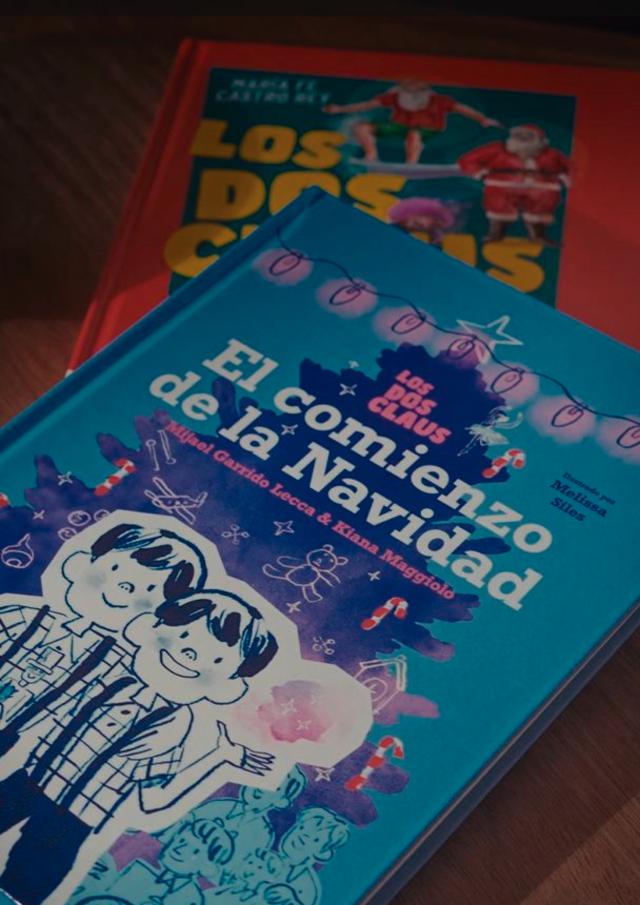
What began as a late-night idea among SIPA classmates has grown into a global storytelling phenomenon. Cofounder Mijael Garrido Lecca MPA ’23 helped launch The Navidad Sur Project, a storytelling universe that reimagines the origin story of Santa Claus through the lens of the Southern Hemisphere. With support from Aranzazú Jorquiera Johnson MPA-DP ’23, the project envisions Christmas with summer, sunlight, and traditions rarely reflected in the global canon. The project has expanded into bestselling children’s books published by Penguin Random House, international distribution across the Americas, and a growing slate of film, theater, and digital ventures, all while advancing a strong social impact mission. Lecca and Johnson reflect on how their time at SIPA helped shape the project and why courage is at the heart of building something new.
Navidad Sur began as an idea while you were at SIPA. Can you take us back to the moment the concept first emerged?
Jorquiera Johnson: The project really started in Lehman Library, where I remember having conversations with Mijael about the concept. Columbia is literally written into the story, with some of the earliest scenes in the book taking place there. Growing up in Peru, my family often adopted Western traditions that didn’t fit with the Christmas I celebrated. We’d often celebrate with symbols of the North, like fake pine trees or fake snow, and I began to question why my Christmas was never reflected in the canon. For many in the Southern Hemisphere, Christmas looks very different. It’s summer, not winter. It’s about sunlight, large family gatherings, and traditions that don’t include snow or reindeer. But those stories have rarely been reflected in the canon.
Garrido Lecca: At a SIPA mixer, we started talking about the idea with classmates from Peru, the Philippines, and Indonesia. To my surprise, the idea of having Southern Hemisphere representation in the Christmas canon resonated with people. That’s when it clicked for me that there was space to expand the story of Christmas and create something more inclusive. After spending a winter in Thailand with my cofounder, Kiana Maggiolo, we started to seriously consider creating the Navidad Sur project and created our first book, which ended up being Los Dos Claus (The Two Clauses), written by María Fe Castro Rey. The story follows Betty, a girl who travels to Machu Picchu from New York and discovers that Santa Claus has a brother, Tayta Claus, who is in charge of Christmas in the Southern Hemisphere.
Aranzazú, what has your role been in supporting the project?
Jorquiera Johnson: As a personal friend of Mijael before and during our time at SIPA, I’ve been a huge supporter of the project from the beginning. Part of my role has been helping connect the team with US-based contacts, drawing on my experience living in New York for over a decade. But more importantly, I’m a huge fan of Navidad Sur. When children see themselves reflected in stories, it changes what they believe is possible. There’s the idea that when you see a role model, you believe you are capable. That’s what this project is doing at scale.
That’s fascinating. How has the project evolved since?
Garrido Lecca: The story has become a full storytelling universe. We’ve published two children’s books, Los dos Claus and El comienzo de la Navidad (The Beginning of Christmas), with Penguin Random House, and both became bestsellers in Peru. The second book, El comienzo de la Navidad, was actually the number one bestselling book in Peruvian history, selling more copies in three weeks than the first edition of Harry Potter. The books were also later released in a Quechua-language edition–the first indigenous-language children’s book in Peru.
A defining feature of your work is its social impact. Can you talk about that dimension?
Garrido Lecca: From the beginning, we wanted this to be more than a commercial project. One of the cornerstones of our model is that we donate 100 percent of book royalties to social impact initiatives. So far, we’ve donated around $30,000 to organizations like Make-A-Wish International and Peru Champs, which focuses on education. We’ve also distributed more than 10,000 books through partnerships, including 1,000 Quechua-language books, and donated 1,000 books to Spanish-speaking children across cities in the United States, like New York, Miami, Houston, Los Angeles, and Washington DC. For us, success is about both cultural impact–helping children see themselves in stories–and tangible social outcomes.
Your paths to SIPA and beyond have been unique. Can you walk us through them?
Garrido Lecca: I started my career in journalism. I began writing for newspapers at the age of 16, eventually becoming a news anchor and hosting my very own late-night show in Peru. By 2018, I was ranked among the most influential journalists in Peru. After that, I moved to the United States with my wife and came to SIPA. At SIPA, I worked as a consultant on a capstone project with Bank of America, helping to translate Latin American markets for US-based teams. But I wanted to focus on social impact, and Navidad Sur gave me the confidence to build something new.
Jorquiera Johnson: My path after SIPA was shaped by relationships. I connected with an alum through the Career Center when Cullen Newton introduced me to my current organization, which helped guide my journey here. My current role is centered around leadership, belonging, and mentorship. I work as a program manager, helping design and deliver initiatives that help organizations build stronger employee communities–spaces where people feel connected, supported, and can grow.
How did your time at SIPA shape your ability to build this venture?
Garrido Lecca: SIPA gave me the tools to operate in complex environments. The program emphasizes understanding global systems, which are frameworks that are incredibly useful when building something that spans culture and social impact. Many of our early conversations and feedback also came directly from the SIPA community. SIPA reinforced the idea that you can take an unconventional path. Not everyone needs to follow the same trajectory into traditional industries.
You speak about the importance of courage in building something new. What do you mean by that?
Garrido Lecca: I think courage is often underestimated. It’s not always something that’s rewarded immediately, and it doesn’t always look glamorous. My cofounder Kiana [Maggiolo], and I started the company with just $72. At the time, it would have been much easier to stay on a more traditional career path. But entrepreneurship is really about having an idea and having the courage to take that first step when the outcome is uncertain. There’s a perception that entrepreneurs come from certain backgrounds, but that’s not necessarily true. Anyone with a strong idea and the willingness to act on it can build something meaningful.
What advice would each of you give to current SIPA students?
Jorquiera Johnson: Start early in your job search and build connections throughout your time at SIPA, even from the beginning. Think about what you can give and share with others, not just what you can take. And be present for people consistently, not only when you need something.
Garrido Lecca: Don’t feel confined by traditional career paths. If you have an idea, take it seriously. You don’t need perfect conditions to start. What you need is discipline and talent.
What’s next for The Navidad Sur Project?
Garrido Lecca: We’re continuing to expand the story into new formats, like books, theater, and film. The goal is to build a global storytelling platform that reflects a more inclusive vision of the world. At its core, the project is about representation–making sure that children everywhere can see themselves in the stories they grow up with.