
News & Stories
All News & Stories

Using Iran as a lens, Eddie Fishman explains how economic sanctions became one of America's favorite foreign policy tools, why they're often seen as an alternative to war, and what happens when those plans collide with the realities of the world they're meant to change.

As its first federal director, Tim Naftali, now a senior research scholar at Columbia University, was responsible for transforming Richard Nixon Presidential Library and Museum, including its Watergate exhibit, which contained false claims and had been put together by Nixon allies, into a place that told a more truthful story. “We had to create a different culture, a nonpartisan culture,” he told me. He faced intense pressure from the Richard Nixon Foundation, which saw the place more like a shrine, he said.
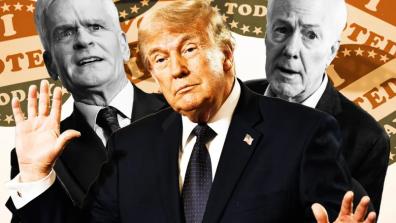
Columbia political scientist Robert Shapiro noted that Trump-backed candidates' primary success may not translate to general election victories — a pattern Republicans have seen play out before.
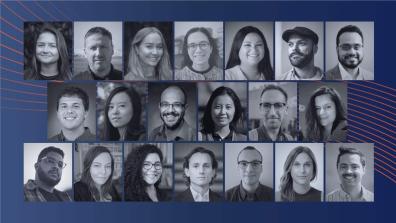
The Center on Global Energy Policy (CGEP) at Columbia University’s School of International and Public Affairs today announced the journalists who have been selected for the 2026 Energy Journalism Fellows (EJF) program, which will be held on the Columbia University campus in New York City from June 9 to June 12.
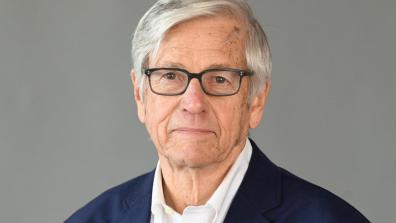
A giant in the social sciences, dedicated public servant, and generous mentor to generations of students and scholars, Professor Kenneth Prewitt’s contributions to Columbia University and to the broader worlds of policy and academia were immeasurable.

"Governments have good reasons to use tariffs or sanctions for geopolitical purposes but should consider the trade-offs," Jeffry Frieden writes.
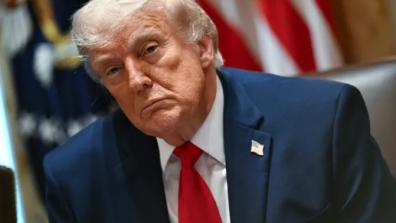
Robert Y. Shapiro told Newsweek: "The concern about Independent voters is not very relevant to primaries but is a danger sign for Republicans in the midterm elections if they hold Republican candidates accountable for Trump's blunders so far. If this carries forth to the next presidential election, in 2029 the Democrats will likely control the presidency and both houses of Congress."
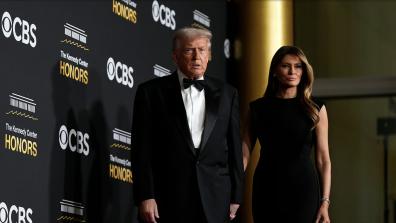
“The president has an outsized personality,” said Timothy Naftali, former director of Richard Nixon’s presidential library and professor at Columbia University’s School of International and Public Affairs. “There’s a predictability to the way in which the president frames his actions — or any actions around any event associated with him — and that’s just part of who he is, and his makeup and his professional background.”
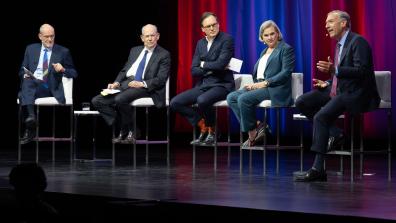
Victoria Nuland and IGP Carnegie Distinguished Fellow Secretary Mike Pompeo teamed up last week at the Munk Debate on why foreign wars fail, arguing in favor of US leadership responsibility and global engagement.
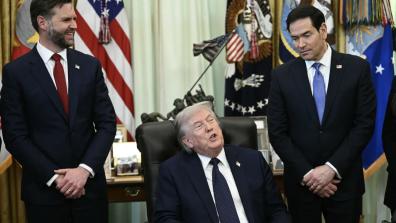
Columbia University professor Robert Y. Shapiro told Newsweek that, "Rubio has clearly overshadowed Vance on the Iran war and foreign policy. And outperformed as a national leader, leaving Vance behind. And we know that Trump's effort at regime change was not a priority for Vance to say the least. It is far too early for them to declare their candidacy. And they will be taking their cues from Trump."