Image
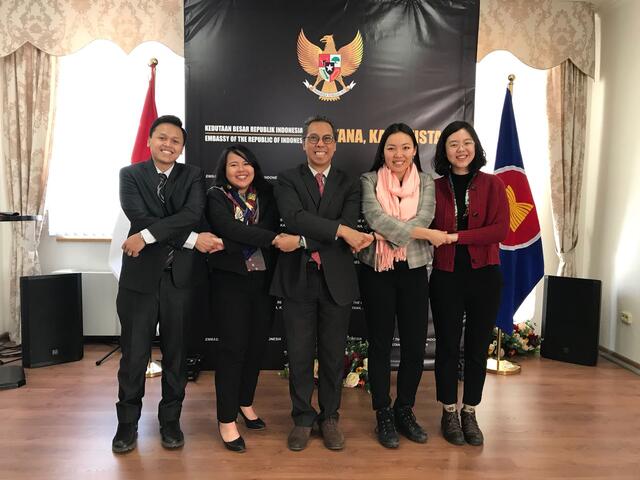
Based at Al Farabi Kazakh National University in Almaty, Kazakhstan, the Model United Nations New Silk Way (MUN-NSW) is a student-led initiative established in 2011 to help students in South and Central Asia (SCA) develop negotiation and diplomacy skills, build professional networks, and foster cultural exchange and regional cooperation. A SIPA team was tasked with these objectives: 1) to assess the effectiveness and efficiency of MUN-NSW in achieving its mission; 2) to gather international MUN practices in promoting MUN movements of other countries; and 3) to develop recommendations for new policy directions that would help MUN-NSW implement its strategic plans. To achieve these objectives, the team examined current MUN-NSW practices, institutional capacity and management in order to identify the enabling and constraining factors faced by MUN-NSW particularly its Organizational Committee.
The team identified many strengths: wide university network, strong financial support from external partners, and scholarships provided to all Conference delegates, all of which contribute to MUN-NSW's strong reputation among its stakeholders in Central Asia. However, as a young and dynamic organization, MUN-NSW is also vulnerable to certain risks: mainly competition from other regional MUN Clubs/Conferences and new financial grant rules. The team also examined the operational practices and organizational structures of MUN Clubs of Columbia University, Boston University, Peking University, and two MUN conferences in Budapest, Hungary. Both the assessment of MUN-NSW and the international case studies inform the list of recommendations the SIPA team has prepared for the client’s consideration. The key recommendations include: (1) to strengthen institutionalization of the Organizational Committee; (2) to improve MUN-NSW’s financial resilience; and (3) to optimize the operational quality of the Conference.