International Students and SIPA
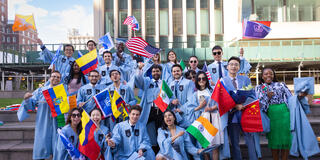
A recurring question I get from international students regarding SIPA is the compatibility of the program for those whose career ambitions are not focused on Washington, DC, or the United Nations in New York.
Let’s talk through the different factors to consider, as non-Americans, when making final decisions on your graduate path. Many of these factors apply to SIPA more globally, but I will use my International Security and Diplomacy (ISD) concentration experience as a reference point.
The Academic Focus
The good thing about going to a practitioner school is that the emphasis of teaching is placed on the hard skills expected of you in the job market. Skills, it so happens, tend to translate pretty well regardless of where in the world you end up working post-graduation.
Courses offered in the ISD concentration, for example, do not tend to have a regional focus (notwithstanding regional studies classes). While classes like Conduct of War may pull more heavily on US military theory, the case studies explored are varied and international. They will range from German logistics in World War I to the Russo-Georgian War of 2008.
More importantly, the skills that are taught are meant to be universally applicable, and will favor concepts and analytical tools over history-heavy learning. Whether you choose to apply those skills in a career overseas or in the United States will, therefore, have little impact on your competency in your field as a whole.
Placement and Employment
In addition to the regular databases, Excel sheets, newsletters, and opportunities offered by the Career Advancement Center at SIPA, the CAC has developed a partnership with Interstride advertising placement opportunities and internships in over 80 countries, with the possibility of connecting to alums around the world.
The ISD department, in addition to the regular Career Advancement Center lists of opportunities, sends out a weekly newsletter featuring opportunities and events relevant to the field. Many of these are based in the US, but not exclusively. In fact, the department makes a point of trying to include opportunities abroad to account for the varied backgrounds of the student body.
The Student Body
Beyond the classroom and workplace, SIPA has a historic preference for an international student body. Amongst policy schools in the United States, we offer the most diverse cohort, with over 92 countries represented and well above half of the student body coming from abroad.
As you walk along the hallways of the International Affairs Building, you’ll be blessed, daily, with the tune of over 50 different native languages spoken by our students. There are very few places that will provide such an opening into the world. The people with whom you share classes may well be the ones sitting across from you, anywhere in the world, in your future careers. The learning experience and the network you will develop outside of the classroom, through your peers, will be an important and rich part of the Columbia SIPA legacy.
International Clubs and Culture on Campus
Within SIPA, international student organizations thrive. Among the most active and popular ones are:
- Latin American Student Association (LASA): Known for their unrivaled parties, LASA is a hub for Latin American students on campus which always attracts a lot of attention. As is the case with most student organizations, their events are usually open to all – whether or not you may consider yourself Latin American.
- Columbia European Union Student Association (CEUSA): More academically and professionally driven, CEUSA offers access to key European figures and is host to many events that promote interest and engagement with European affairs.
Beyond SIPA itself, the heart of campus beats to an international tune. Perched between Low Library and the Philosophy Hall lies a small, quaint, brick mansion. As one of the oldest French cultural centers in the United States, Columbia’s Maison Française is just one of many international-driven institutions that make Columbia a great choice for any international student. They recently hosted French National Assembly President Yaël Braun-Pivet for a Q&A with students, and are known to screen classic French movies (sometimes outdoors on the main lawn, in the warmer months). Likewise, the Italian Academy offers cultural programming and academic events to the Columbia community.
International Students: The Beating Heart of SIPA
International students are therefore at the heart of the SIPA experience. Choosing to pursue your studies here will inevitably open up paths for success anywhere in the world, through the hard skills you will pick up, the network of SIPA friends you will build, and the many international opportunities that are commonplace on campus and in the city of New York.
We can’t wait to see you around!